Human Rights Expertise in the Boardroom: A Governance Gap That Needs Closing
October 28, 2026
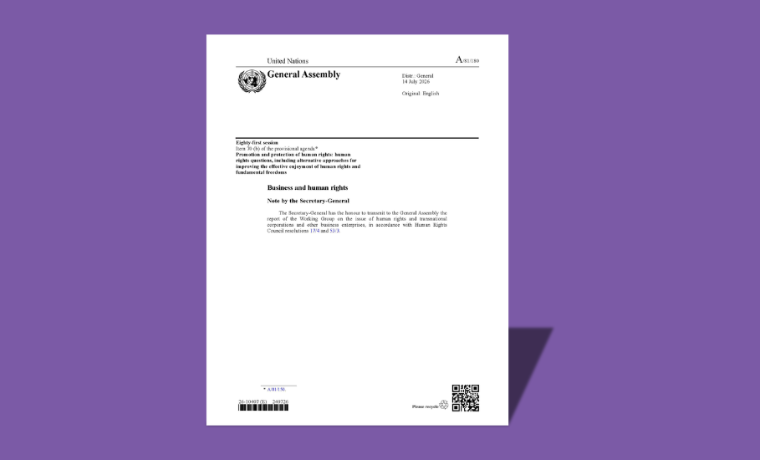
On October 29, Robert McCorquodale, member of the UN Working Group on Business and Human Rights, will present a new report on corporate governance to the UN General Assembly in New York. Its central finding is both important and sobering: human rights expertise is largely absent from corporate governance structures, and the decisions that most determine a company’s human rights impact — strategy, resource allocation, risk appetite — are being made without it. The full report is available on the Working Group’s webpage.
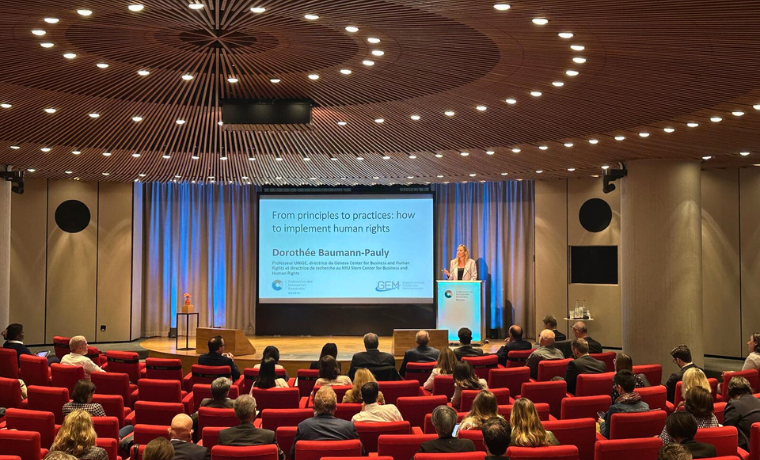
This is a gap I encounter directly. This October I participated in stakeholder advisory board meetings at two companies that have been experimenting, in different ways, with integrating external human rights expertise into their governance processes. Michelin has operated a Stakeholder Advisory Committee for over a decade — a model I have recently joined — which provides a structured channel for independent external perspectives to reach the company’s board and senior leadership. Argor-Heraeus, a precious metals refiner, has developed its own sounding board as a platform for constructive engagement on responsible sourcing and human rights performance. In both cases, CEOs, functional sustainability heads, and board members are present. That direct access to decision-makers is what makes these interactions genuinely useful rather than performative. It also creates space for something harder to achieve through public channels: the ability to raise sensitive issues the company is not yet ready to discuss openly, and to help shape how it responds before those issues become crises.
Participation in these bodies is reimbursed for expenses, but not paid as a consulting engagement. More importantly, participation does not constitute endorsement. It is a platform for honest, sometimes critical, exchange — and its value depends entirely on that honesty being preserved.
These models are interesting experiments in integrating human rights into corporate governance. Companies that create space for external human rights expertise at the governance level are better positioned to identify risks earlier and develop more credible responses when things go wrong. The UN Working Group report makes the same argument from a policy perspective: “corporate governance that respects human rights is a core element of the corporate responsibility to respect human rights”, and directors have a duty to ensure it is embedded in how companies are led.
The limitation of these individual company arrangements, however, is that they are not scalable. A handful of external experts participating in advisory boards is a useful experiment, not a systemic solution. What systemic change actually requires is board training on human rights, the full integration of human rights competencies into director selection and evaluation, and governance structures that make human rights expertise a standing feature of board oversight rather than an occasional external input.
External thematic experts can and should continue to support companies on a case-by-case basis. But the goal is to make that external support progressively less necessary. Expertise and accountability must be built into the governance architecture itself.
The report is a timely call to action. Academic centers at business schools, where research on corporate governance and human rights is conducted, are uniquely well positioned to translate that research into board training. The NYU Stern Center and the Geneva Center for Business and Human Rights stand ready to do exactly that
 Business & Human Rights Leadership
Related
See all