Reality Check: How to Protect Human Rights in the 3D Immersive Web
September 2023
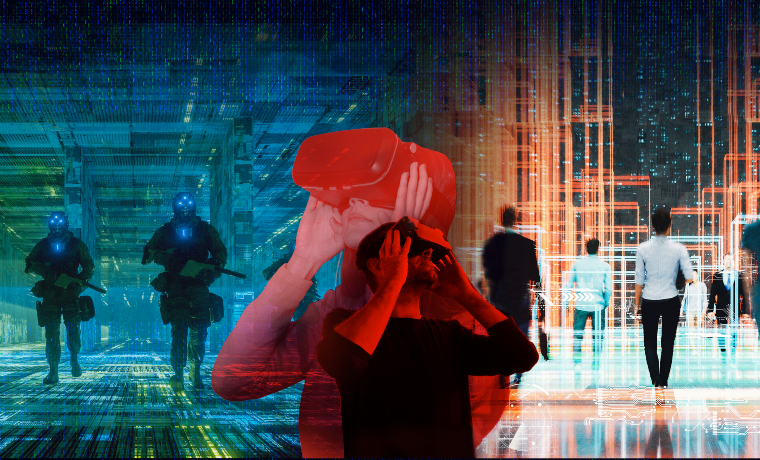
Advances in immersive technologies mean that in the near future, people will consume digital content and interact in 3D, eclipsing the 2D Internet.
A new report by the NYU Stern Center for Business and Human Rights explains two pressing risks related to the mass adoption of immersive technologies: an unprecedented erosion of privacy and proliferation of physical aggression in virtual environments.
Immersive technology will power the “metaverse,” the sprawling collection of virtual environments on which the Silicon Valley giant Meta has staked its future success.
Other large tech companies, including Apple, Microsoft, Nvidia, and Sony, have made sizable investments in immersive technology as well, using alternative terms like “extended reality” (XR) and “spatial computing.” Regardless of the specific form that it takes, the 3D web will usher in new threats to human rights and exacerbate old ones. Businesses and policymakers should learn from the mistakes of the past and take proactive action to mitigate those harms.
 Technology & Democracy
Related
See all
Digital Risks to the 2024 Elections: Safeguarding Democracy in the Era of Disinformation
A new report by Paul M. Barrett, Justin Hendrix and Cecely Richard-Carvajal highlights that this year's primary tech-related threat to elections isn't AI-generated content, but the spread of false, hateful, and violent content on social media platforms.

Safeguarding AI: Addressing the Risks of Generative Artificial Intelligence
Our report on safeguarding AI argues that the best way to prepare for potential existential risks in the future is to begin now to regulate the AI harms right in front of us.

Gaming The System: How Extremists Exploit Gaming Sites And What Can Be Done To Counter Them
Our report describes how extremist actors are exploiting online gaming sites to disseminate violent ideologies, network with like-minded people, and perpetrate real-world harm.