Formalizing Artisanal Small-Scale Mining Can Address Forced Labor Risks
April 1, 2026
Regulatory pressure on companies to rid their supply chains of forced labor is building on both sides of the Atlantic. In 2027, companies subject to the European Union’s Forced Labour Regulation will have to identify, address, and, where necessary, withdraw from supply chains tainted by forced labor, with the burden of proof effectively reversed: rather than waiting for authorities to prove violations, companies must demonstrate their products are free of forced labor. Earlier this month, the Trump administration announced it will expand
enforcement of forced labor restrictions to more than 60 countries.
The real test of these regulations, however, lies not in their stated targets but in the supply chains they have yet to reach. From a responsible sourcing perspective, the new regulations strengthen the case for formalizing artisanal and small-scale mining (ASM), a largely overlooked but vital part of many critical battery mineral supply chains. In the context of cobalt production in the Democratic Republic of Congo (DRC), ASM and industrial mining are intertwined at multiple points along the global supply chain: at mines, buying houses, and smelters and refiners in both the DRC and China.
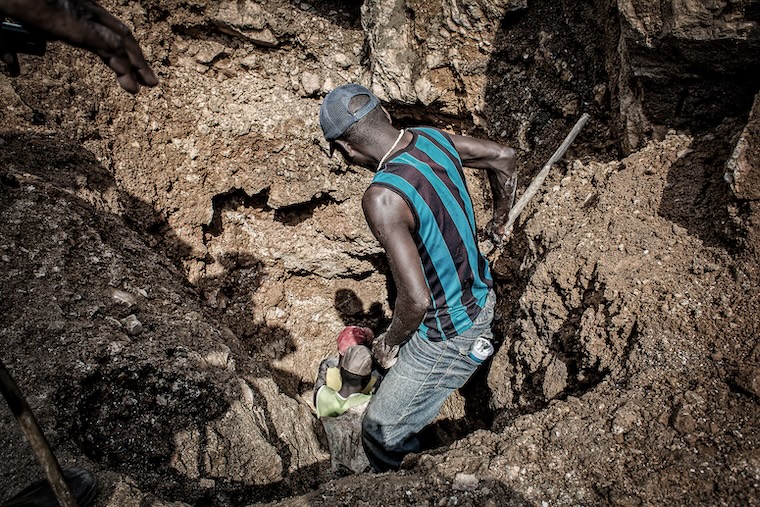
The DRC produces two-thirds of the world’s cobalt. An estimated 15 to 30 percent of that cobalt originates in artisanal mines, where miners extract ore from hand-dug shafts and tunnels as deep as 100 meters below the surface, typically working in small teams of five to seven people per shaft.
The entry barriers to becoming an artisanal miner are low—a basic mining kit costs around $50 on the local market—but the economics are precarious. Finding a viable ore stream can take weeks, during which miners earn nothing. To bridge this gap, teams typically turn to negotiants: informal intermediaries who provide modest pre-financing so that miners can cover basic living costs during the exploration phase. Once production begins, that debt must be repaid before miners see any real earnings. If cobalt prices fall in the interim, which, given the commodity’s volatility, is always a risk, repayment can take months longer than anticipated.
This debt dynamic is where the risk of debt bondage is most acute: miners who cannot repay are effectively trapped, unable to leave without surrendering what little they have already earned.
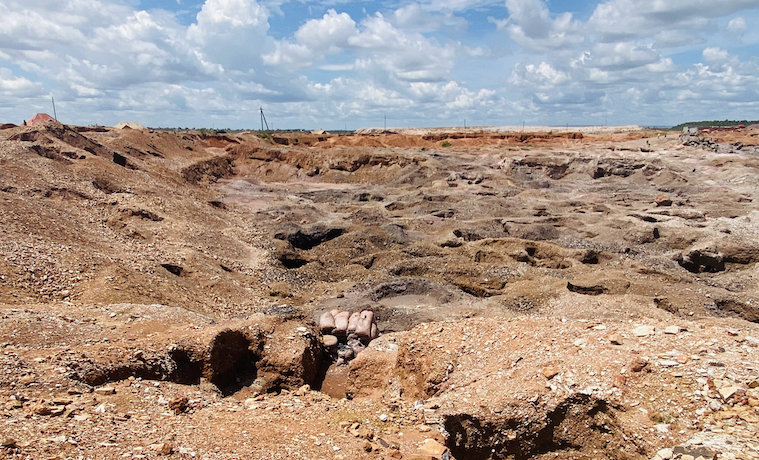
Formalization offers a concrete path out. When formalization standards require a shift to open-pit mining, the economics change fundamentally. Ore is accessible from day one, miners begin earning immediately, and the need for pre-financing disappears. Open-pit mining also eliminates the acute safety hazards of hastily dug underground shafts—tunnels that are frequently structurally compromised by the pressure to start producing before proper reinforcement is in place. Our research in the DRC has documented that formalization addresses a range of human rights challenges in one intervention: it reduces child labor, improves mine safety, and—critically—removes the conditions that make debt bondage possible in the first place.
Companies that depend on cobalt and are now facing mandatory human rights due diligence obligations—whether under the EU’s Forced Labour Regulation, the Corporate Sustainability Due Diligence Directive, or equivalent national legislation—should treat support for ASM formalization not as a voluntary gesture of corporate responsibility, but as a core and legally relevant component of their forced labor compliance strategy.
The regulatory pressure now building on both sides of the Atlantic creates a rare moment of alignment between commercial self-interest and human rights. Companies that act now—investing in formalization, building long-term relationships with cooperatives, and supporting the transition to open-pit production—will be better positioned to meet incoming due diligence requirements and more resilient to supply chain disruption. Those that rely on contracts, audits, and certifications to paper over the informal sector are likely to find that the gap between procedural compliance and actual accountability is closing faster than they expect. Formalization is not a cost to be absorbed. It is an investment in the only sourcing model that is both legally defensible and just.
 Global Labor
Related
See all