Disinformation And The 2020 Election: How The Social Media Industry Should Prepare
September 2019
The role of social media in a democracy
In our fourth report on online disinformation, the NYU Stern Center for Business and Human Rights explores risks to democracy and free speech posed by the expected spread of disinformation during the 2020 U.S. presidential election. The report outlines steps the social media companies should take to counter the coming wave of disinformation.
Preparing for the fight against false and divisive content will not be cost-free. But investments in R&D and personnel ultimately will help social media platforms restore their brand reputations and slow demands for draconian government regulation.
Enhancing disinformation policies
Social media companies’ policies on disinformation often lack clarity and strategic foresight and have been enforced in an ad hoc fashion. To reduce the probability of governmental content regulation in the U.S., these companies should show they can close the governance gap when it comes to disinformation.
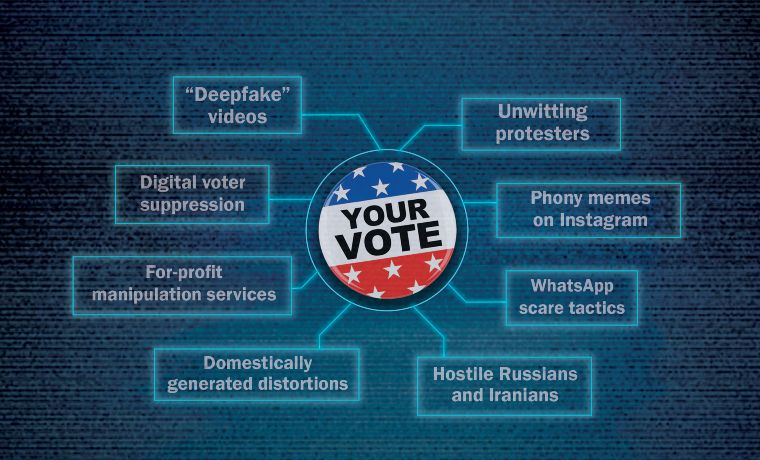
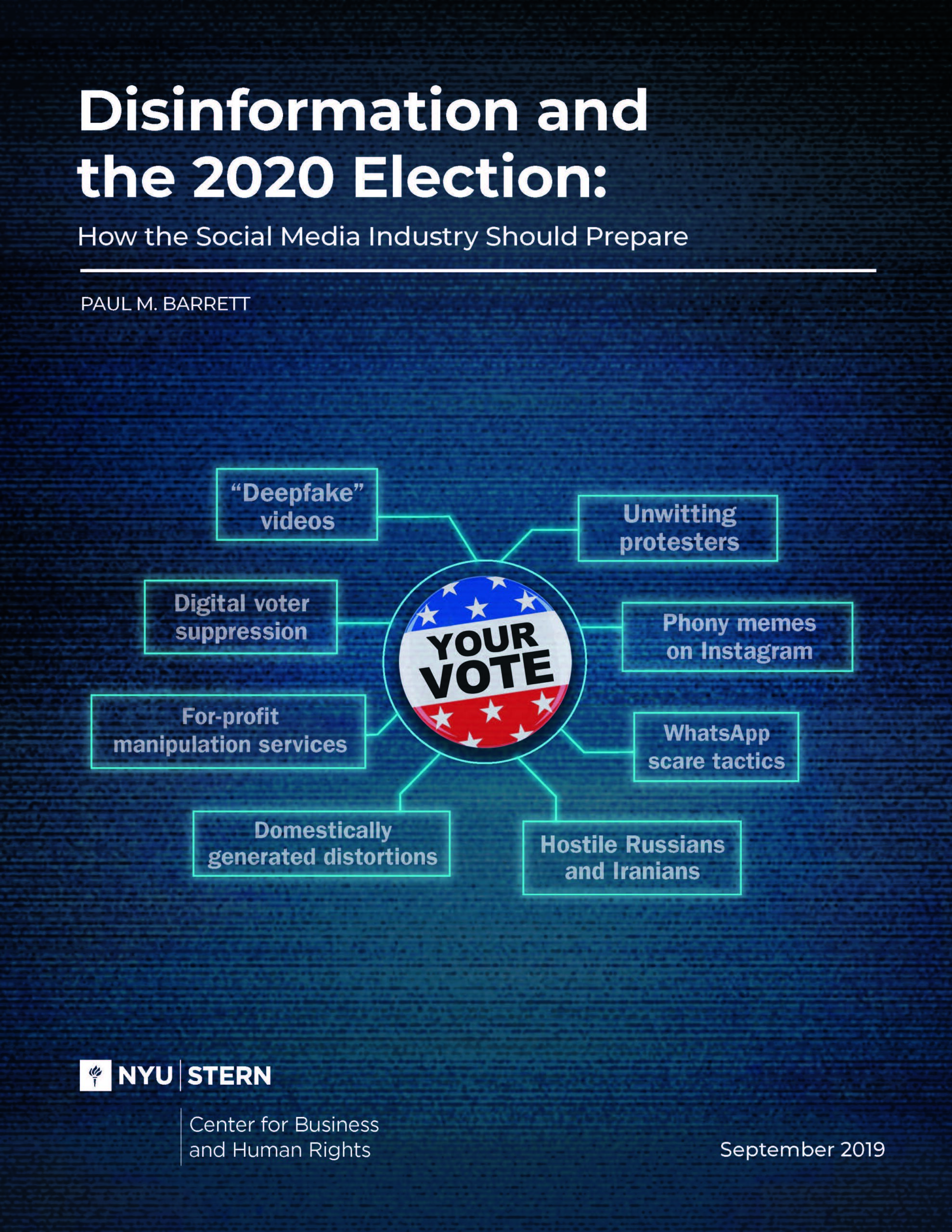
Read our examination of how social media companies have reacted to politically oriented false content, and the disinformation tactics they will need to prepare for in 2020.

 Technology & Democracy
Related
See all
Digital Risks to the 2024 Elections: Safeguarding Democracy in the Era of Disinformation
A new report by Paul M. Barrett, Justin Hendrix and Cecely Richard-Carvajal highlights that this year's primary tech-related threat to elections isn't AI-generated content, but the spread of false, hateful, and violent content on social media platforms.
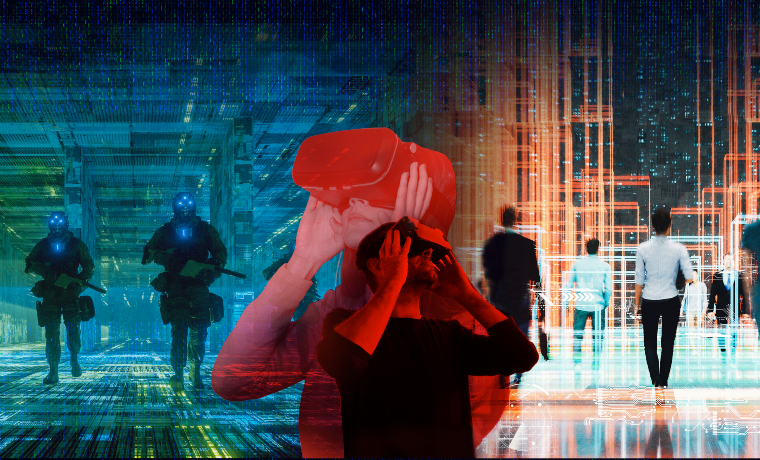
Reality Check: How to Protect Human Rights in the 3D Immersive Web
Our report written by Mariana Olaizola Rosenblat explains the risks to privacy and safety exacerbated by immersive technologies and recommends steps tech companies and the government can take to minimize those risks.
Safeguarding AI: Addressing the Risks of Generative Artificial Intelligence
Our report on safeguarding AI argues that the best way to prepare for potential existential risks in the future is to begin now to regulate the AI harms right in front of us.