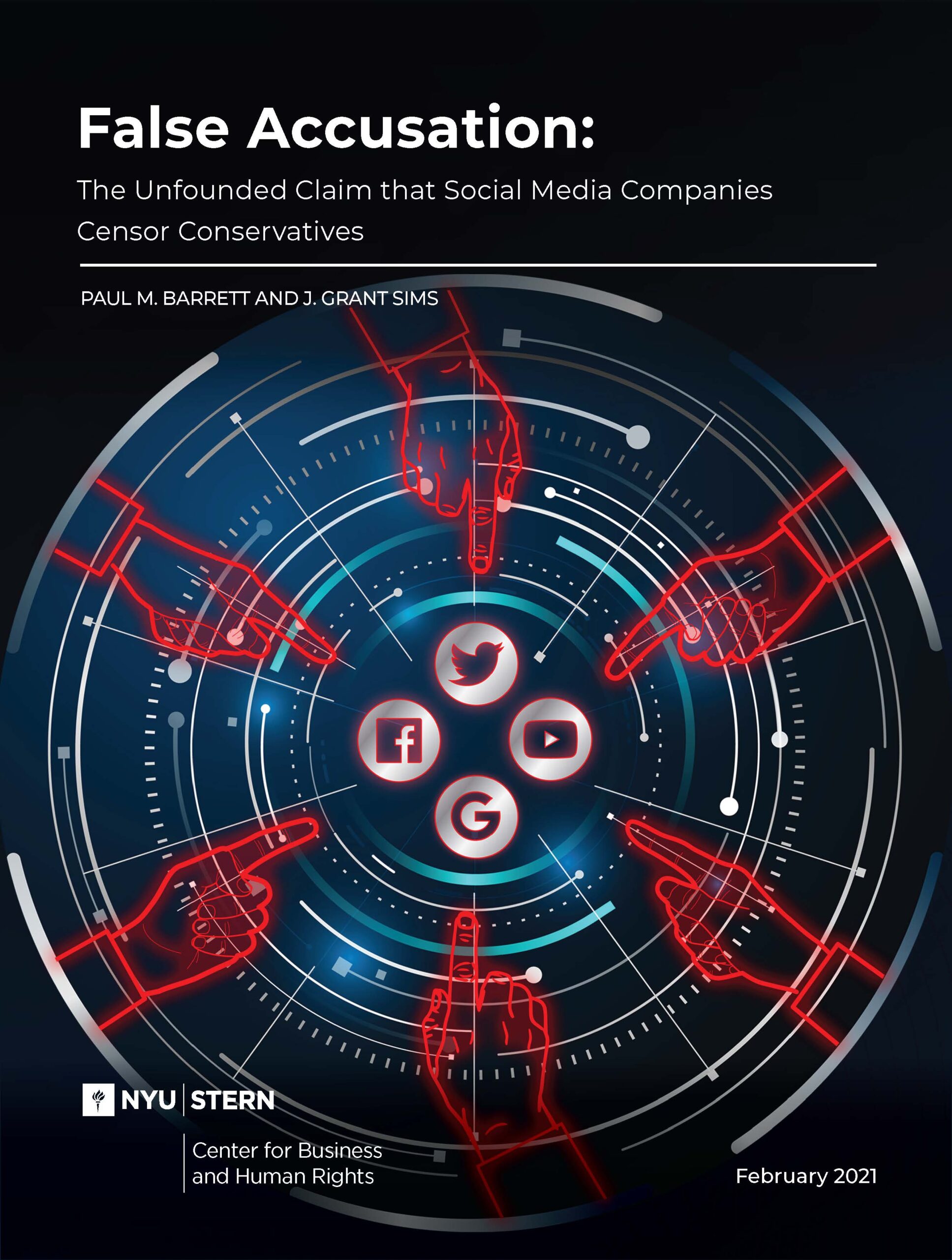
False Accusation: The Unfounded Claim That Social Media Companies Censor Conservatives
January 2021
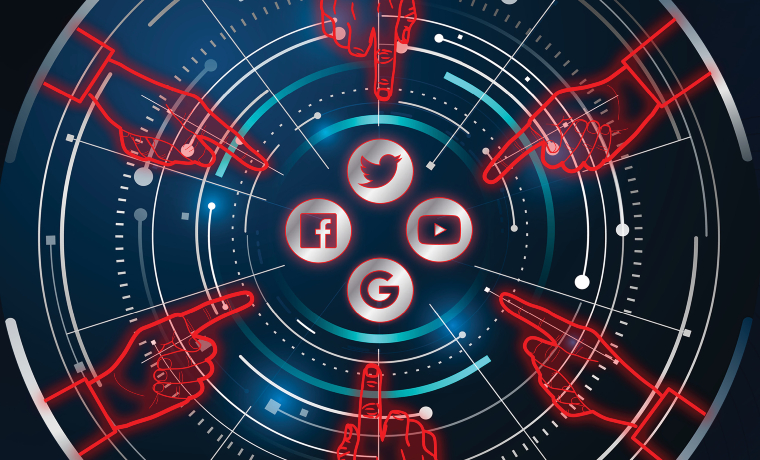
Do Facebook and Twitter suppress the political right?
The claim that social media companies censor conservatives has shaped debate about issues ranging from the fallout from the January 6, 2021, Capitol riot to reform of Section 230 of the Communications Decency Act, which protects platforms against liability for user posts and content moderation decisions. But the censorship claim is false, as our report demonstrates by analyzing available data and individual examples.
The aftermath of mob violence in Washington, D.C.
Conservatives have attacked Twitter’s decision, in the wake of the Capitol insurrection, to ban Donald Trump permanently. But Twitter did not act based on ideology. The former president repeatedly violated the platform’s rules and contributed to a real danger of further violence. By closely analyzing such episodes, the report clarifies the industry’s actual conduct and clears the way for needed reform.
 Technology & Democracy
Related
See all
Digital Risks to the 2024 Elections: Safeguarding Democracy in the Era of Disinformation
A new report by Paul M. Barrett, Justin Hendrix and Cecely Richard-Carvajal highlights that this year's primary tech-related threat to elections isn't AI-generated content, but the spread of false, hateful, and violent content on social media platforms.
Reality Check: How to Protect Human Rights in the 3D Immersive Web
Our report written by Mariana Olaizola Rosenblat explains the risks to privacy and safety exacerbated by immersive technologies and recommends steps tech companies and the government can take to minimize those risks.
Safeguarding AI: Addressing the Risks of Generative Artificial Intelligence
Our report on safeguarding AI argues that the best way to prepare for potential existential risks in the future is to begin now to regulate the AI harms right in front of us.