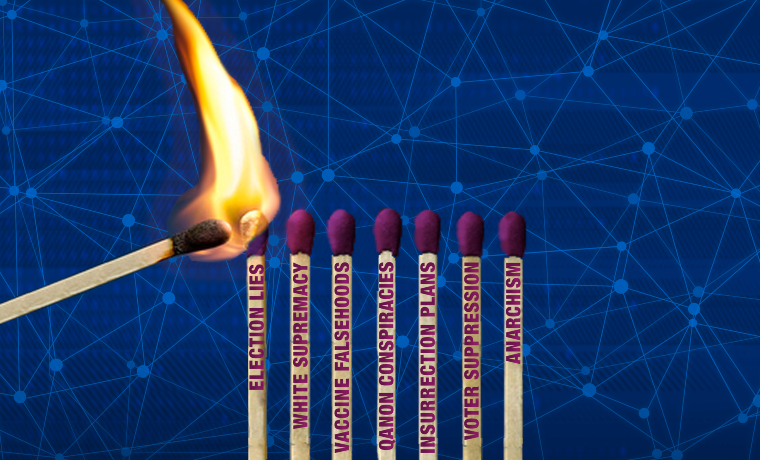
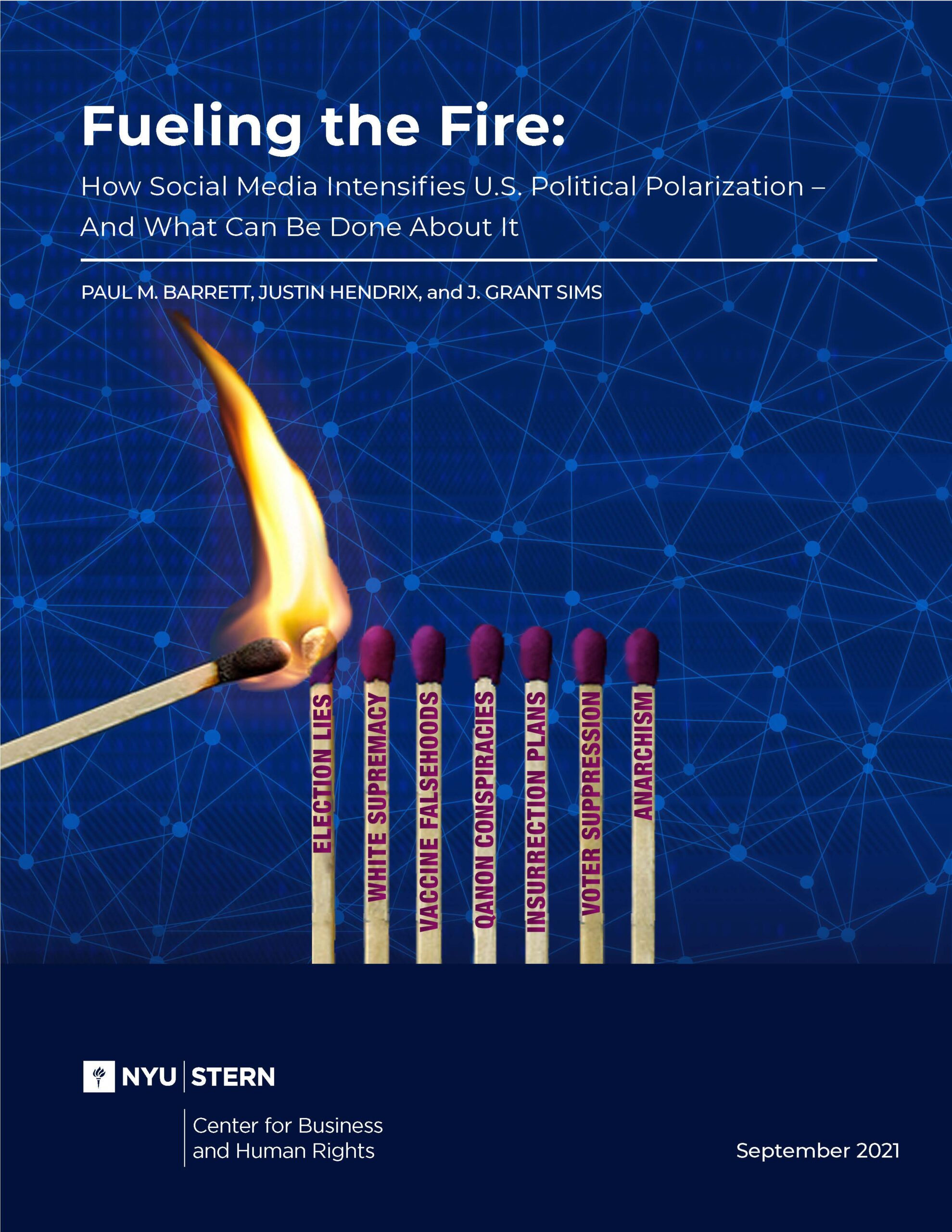
Fueling The Fire: How Social Media Intensifies U.S. Political Polarization – And What Can Be Done About It
September 2021
Do major tech sites stoke political polarization?
Some critics of the social media industry contend that widespread use of Facebook, Twitter, and YouTube has contributed to increased political polarization in the United States. But Facebook, the largest social media platform, has disputed this contention, saying that it is unsupported by social science research. Determining whether social media plays a role in worsening partisan animosity is important because political polarization has pernicious consequences. We conclude that social media platforms are not the main cause of rising partisan hatred, but use of these platforms intensifies divisiveness and thus contributes to its corrosive effects.
The consequences of extreme partisan animosity
In the U.S., where divisiveness has reached new extremes, the consequences of polarization include declining trust in fellow citizens and major institutions; erosion of democratic norms like respect for elections; loss of faith in the existence of commonly held facts; and political violence such as the January 6, 2021, insurrection on Capitol Hill.
 Technology & Democracy
Related
See all
Digital Risks to the 2024 Elections: Safeguarding Democracy in the Era of Disinformation
A new report by Paul M. Barrett, Justin Hendrix and Cecely Richard-Carvajal highlights that this year's primary tech-related threat to elections isn't AI-generated content, but the spread of false, hateful, and violent content on social media platforms.
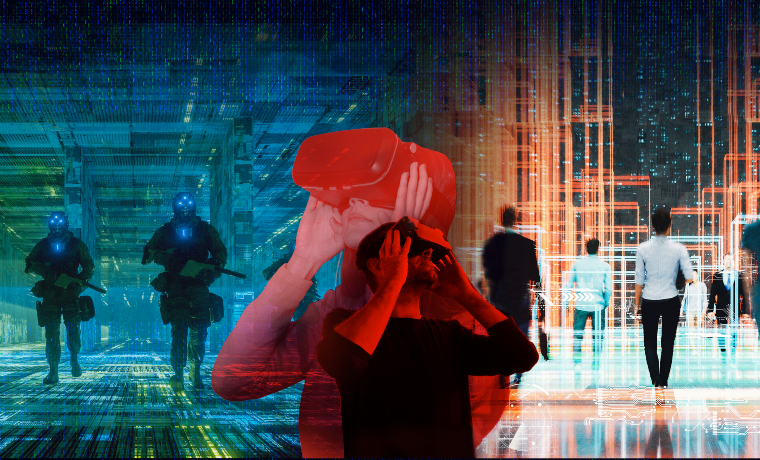
Reality Check: How to Protect Human Rights in the 3D Immersive Web
Our report written by Mariana Olaizola Rosenblat explains the risks to privacy and safety exacerbated by immersive technologies and recommends steps tech companies and the government can take to minimize those risks.
Safeguarding AI: Addressing the Risks of Generative Artificial Intelligence
Our report on safeguarding AI argues that the best way to prepare for potential existential risks in the future is to begin now to regulate the AI harms right in front of us.