Responsible Cobalt Sourcing from the Democratic Republic of the Congo: What the New Standard for Artisanal and Small-Scale Mining Must Get Right
September 16, 2026
Entreprise Générale du Cobalt (EGC), the Democratic Republic of the Congo’s state entity that holds the monopoly over artisanal cobalt purchasing, has opened a public consultation on its Responsible Sourcing Standard. EGC shared the draft Standard with me, and it is comprehensive, covering governance, traceability, environmental management, and grievance mechanisms across the full supply chain from miner to buyer. It deserves a careful read. But for companies that need cobalt and are asking whether responsible sourcing from artisanal and small-scale mining (ASM) is genuinely possible, one question matters above all others: does this Standard set the bar high enough on the two issues that currently undermine confidence in ASM cobalt?
Those two issues are child labor and mining accidents. Everything else is important. These two are decisive.
The Two Issues That Determine Whether ASM Cobalt Can Be Trusted
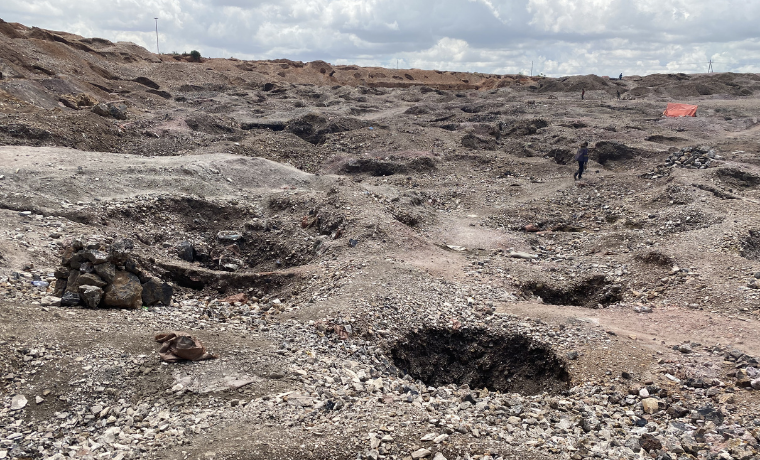
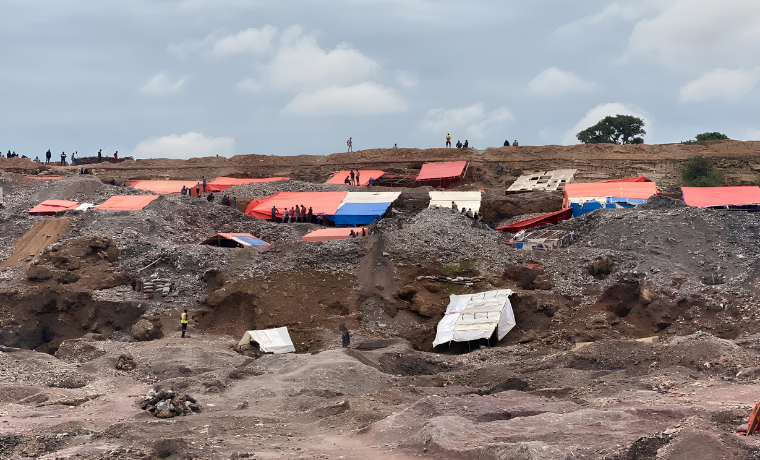
Artisanal miners in the DRC extract cobalt from hand-dug shafts and tunnels, some reaching depths of 100 meters. These excavations are structurally precarious, dug under pressure to begin producing and can collapse without warning, burying miners alive. The EGC Standard gets this right: it requires that pits not exceed 10 meters in depth and forbids tunneling. These are the correct requirements. But they are far from standard practice on the ground today. Setting the Standard is the necessary first step. The harder work is the transition from tunnel-based extraction to open-pit mining, and that transition will not happen without active collaboration between EGC, local cooperatives, buyers, and investors.
Mercuria, the global energy and commodities group, has pledged to do exactly this at Kasulo, where its agreement with EGC specifically targets the shift to open-pit extraction as the foundation of responsible sourcing. That commitment is significant. But one company’s effort at one site is not a sector-wide transformation. For the EGC Standard to drive real change at scale, it needs to be accompanied by a clear, time-bound plan for transitioning mining cooperatives away from underground extraction, with the financial and technical support from buyers and investors that makes that shift viable.
Child labor is the second issue, and its root cause is equally structural. Significant barriers—socio-cultural, legal, and economic—exist that result in women being excluded from full participation in cobalt mining in Eastern DRC. This exclusion has a direct consequence: household incomes depend entirely on male miners, and when those incomes are insufficient, children are sent to supplement them. The solution is not to build more schools or run awareness campaigns, however well-intentioned. Poverty will undercut those efforts every time. The solution is to create female employment in mining, including in the extraction process, and to support women miners as the primary vehicle for increasing household income. When women earn, research consistently shows that household spending shifts toward children’s education and nutrition. Removing children from mine sites and integrating them into educational programs is achievable, but it requires first ensuring that their families have an alternative income source. The EGC Standard’s new provisions on gender-based violence and discrimination are welcome. But the integration of women as miners, not just as protected workers, needs to become a standard requirement with clear implementation timelines.
Why Formalizing ASM Cobalt Takes Time
Transforming artisanal mine sites does not happen overnight. Conditions at the outset of a formalization process will not be perfect, and it would be dishonest to pretend otherwise. The standard for engagement should not be perfection. It should be a credible, time-bound plan of action supported by clear metrics and independent evaluation. What buyers, investors, and regulators need to see is evidence of direction: children being removed from mine sites and enrolled in education programs, female employment increasing, open-pit areas replacing underground tunnels, accident rates falling week on week. That is the kind of impact data that builds confidence. But generating that data requires more than a standard on paper. The transition from tunnel-based extraction to open-pit mining is, in some cases, capital-intensive and often operationally complex. Buyers who source cobalt need to contribute to financing and supporting that transition through concrete sourcing commitments.
The Mutoshi pilot project which demonstrated that formalization of ASM cobalt is operationally achievable, offers the clearest blueprint for what this looks like in practice. The question now is whether that model can be replicated at the scale the cobalt market requires.
What Companies Sourcing Cobalt Should Do Next
The EGC consultation is an opportunity that companies in need of cobalt should not ignore. Engaging with the Standard and signaling a genuine willingness to contribute to the transformation of the ASM sector is not charity. It is a condition for sustainable sourcing. ASM cobalt from the DRC is not a marginal supply source: it accounts for a significant share of global cobalt production, and it enters the mainstream supply chain at smelters in the DRC, which produce a crude cobalt hydroxide that is then shipped to refiners in China, where almost 80 percent of the world’s cobalt is processed. Companies that source cobalt are sourcing ASM cobalt, whether they know it or not. The temptation to focus on symptoms—tightening audit checklists, adding suppliers, demanding documentation—rather than on the root causes that make artisanal mining unsafe and exploitative leads nowhere. It protects no one and solves nothing.
A high standard, rigorously implemented, with real metrics and independent verification, signals something different: that ASM cobalt can be a driver of development for communities in the DRC for decades to come. That is a future worth investing in. Companies that want to be part of it should say so, loudly, in the EGC consultation process, before the Standard is finalized.
 Global Labor
Related
See all